Choosing the right floating pontoon depends on the location, intended use, required load capacity and local water conditions.
This guide compares Top Marine floating pontoon types and helps you choose a solution for private shores, marinas, harbours, bathing areas, floating platforms and special projects.
First, compare the main product types. Then look at the technical details, such as pontoon floats, dimensions, freeboard height and permitted wave height.
Floating pontoon types for different uses
| Use | Heavy duty pontoon | Timber pontoon with concrete floats | Boat pontoon with plastic floats | Swimming pontoon | Swimming Pontoon ECO |
|---|---|---|---|---|---|
| Private shore | Suitable | Suitable | Suitable | Suitable | Suitable |
| Marina or harbour | Best choice for demanding projects | Suitable for protected basins | Suitable for sheltered waters | Not the main use | Not the main use |
| Swimming and bathing areas | Possible | Possible | Possible | Best choice | Best choice for smaller private use |
| Boat mooring | Suitable | Suitable | Suitable | For small boats only | For small boats only |
| Floating platforms | Suitable | Suitable | Suitable for smaller sheltered projects | Suitable for light use | Suitable for light use |
| Floating houses or saunas | Suitable when designed for the project | Suitable when designed for the project | Suitable for private floating sauna platforms in sheltered waters | Not the right choice | Not the right choice |
| Floating breakwater | Best choice | Not the right choice | Not the right choice | Not the right choice | Not the right choice |
Top Marine pontoon floating solutions suitable for different uses

If you want to try different pontoon placement options, our web application makes planning simple. You can test different floating pontoon layouts and get an idea of the overall project cost. In addition, this guide explains how to use the tool: Offer for a boat pontoon in Top Marine web app in just 3 minutes.
If you already know which pontoon type may suit your project, the next step is understanding the ordering process. Read our guide on how to order a floating pontoon. It explains the process from the first idea and design to production, transport, installation and maintenance.
Heavy duty pontoon – strongest floating pontoon solution
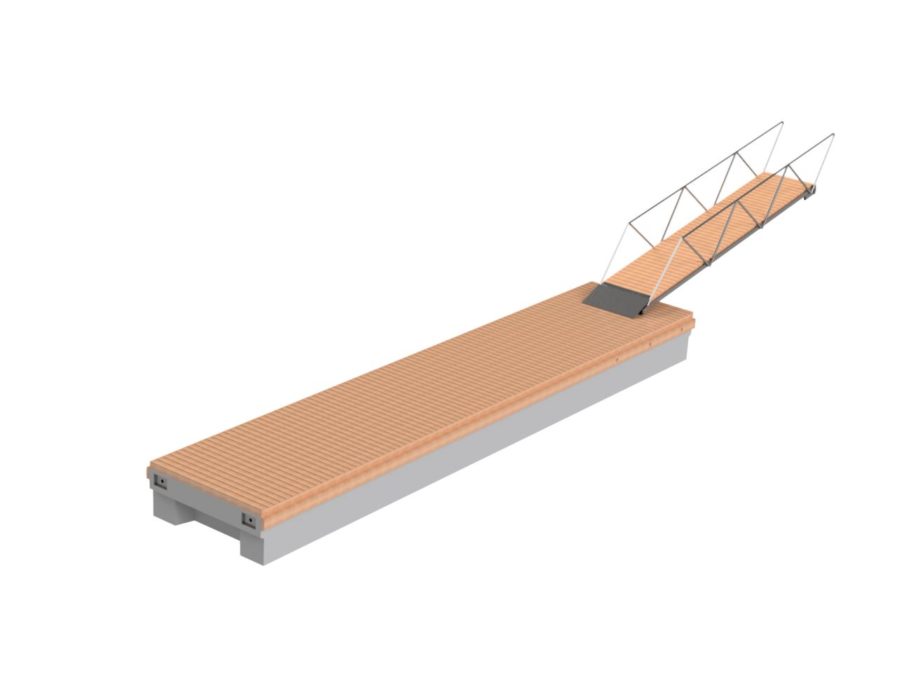
Heavy duty pontoons offer the highest stability and load-bearing capacity in the Top Marine range. Therefore, they work well for demanding marina, harbour and floating platform projects.
You can also choose heavy duty pontoons for floating breakwaters or as a base for water-based structures, such as floating houses or floating saunas, when the structure, anchoring and local conditions allow it.
| Feature | Heavy duty pontoon |
| Typical locations | Yacht marinas, boat marinas, harbours and protected sites |
| Best use | Demanding marina projects, floating platforms, breakwaters and floating houses |
| Permitted wave height | Up to 0.5 m |
| Freeboard height | 0.49–0.7 m |
| Standard widths | 2.4 m, 3.2 m, 4.2 m |
| Standard lengths | 9 m, 12 m, 15 m, 18 m, 20 m |
Timber pontoon with concrete floats
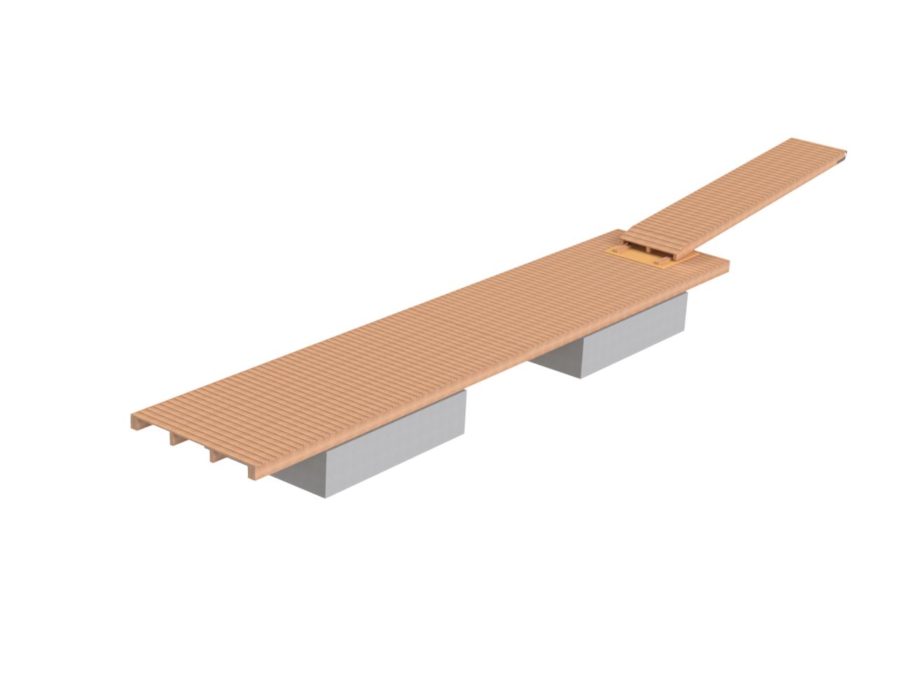
A timber pontoon with concrete floats gives a stable concrete pontoon solution for protected waters. It works well in marinas, yacht harbours, floating platforms and floating house projects where breakwaters or natural landforms protect the site.
This pontoon type combines concrete floats with a timber structure and decking. It also offers good stability and load-bearing capacity. However, it is lighter and usually more cost-effective than a heavy-duty concrete pontoon.
| Feature | Timber pontoon with concrete floats |
| Typical locations | Marinas, yacht harbours and protected port basins |
| Best use | Floating platforms, marina berths and floating house projects in protected waters |
| Permitted wave height | Up to 0.3 m |
| Freeboard height | Approximately 0.5–0.7 m |
| Standard widths | 2.4 m, 3 m, 3.2 m |
| Standard lengths | Selected or customised according to the project |
Boat pontoon with plastic floats
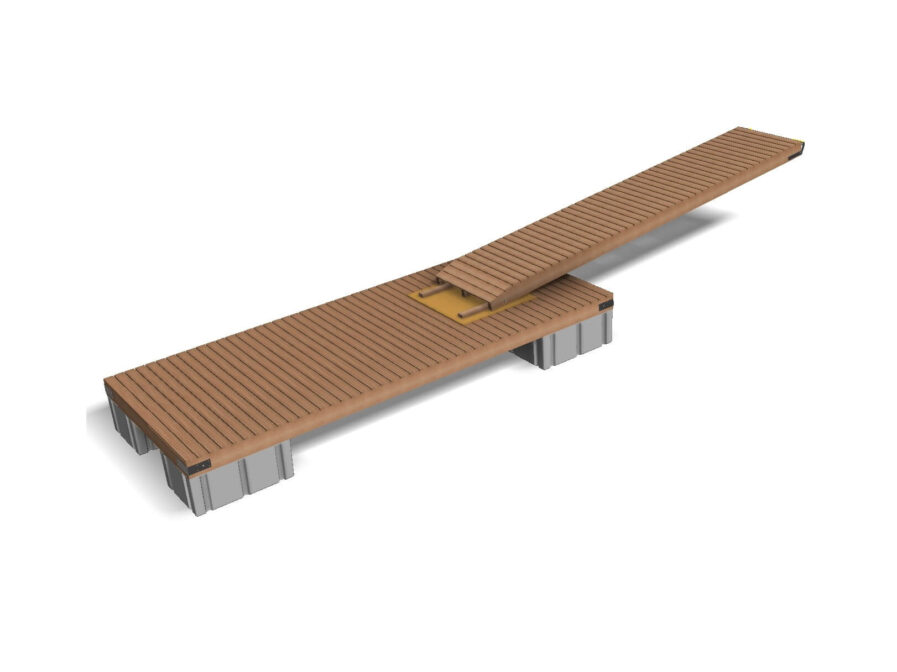
A boat pontoon with plastic floats gives a practical solution for sheltered marinas, small boat harbours and inland waterways. It supports small boat mooring and works well with accessories such as boat booms, mooring buoys and mooring rings.
In addition, boat pontoons with plastic floats can serve as platforms for private floating saunas and other suitable floating platform projects in sheltered waters. However, the final size and anchoring solution must match the site, water depth, intended use and local conditions.
| Feature | Boat pontoon with plastic floats |
| Typical locations | Sheltered marinas, boat harbours and inland waterways |
| Best use | Small boat mooring, private pontoons and sheltered floating platforms |
| Permitted wave height | Up to 0.2 m |
| Freeboard height | Approximately 0.65–0.73 m |
| Standard widths | 2.4 m, 3 m, 3.2 m |
| Standard lengths | 6 m, 8 m, 10 m |
Swimming pontoon
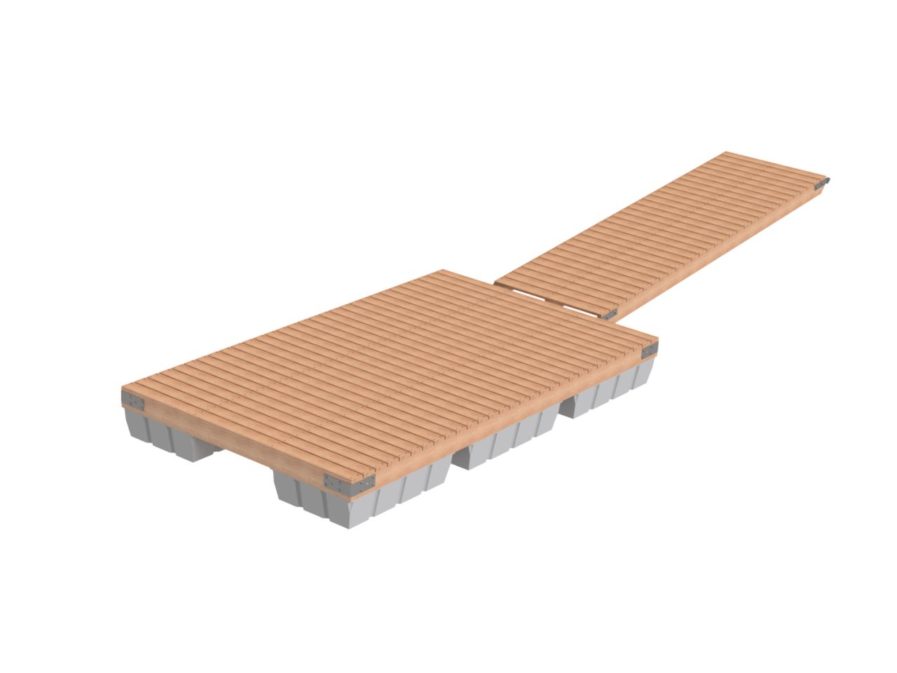
A swimming pontoon works well for beaches, private shores, sheltered inland waters and small floating platforms. Choose this pontoon type when the main purpose is swimming, bathing or simple access to the water.
You can also use swimming pontoons for small boats, depending on the boat size and local conditions. However, they are not the right choice for floating houses, floating saunas or demanding marina projects.
| Feature | Swimming pontoon |
| Typical locations | Beaches, bathing areas, private shores and sheltered inland waters |
| Best use | Swimming, bathing and small floating platforms |
| Permitted wave height | Up to 0.2 m |
| Freeboard height | Approximately 0.35–0.38 m |
| Standard widths | 2 m, 2.4 m, 3 m |
| Standard lengths | 4 m, 5 m, 6 m |
Swimming Pontoon ECO
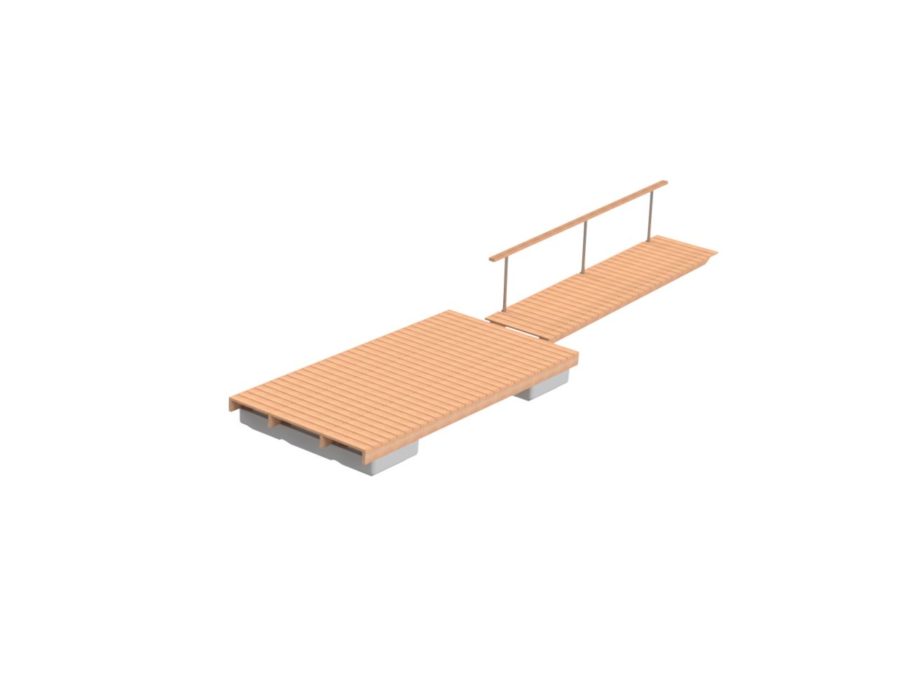
The Swimming Pontoon ECO is a compact and cost-effective floating pontoon solution for private shorelines, summer homes, bathing areas and sheltered inland waters.
It is easy to transport and fits smaller projects where you need a simple, stable and comfortable swimming pontoon. In some cases, it can also work as a small boat pontoon or light floating platform, depending on the site and intended use.
| Feature | Swimming Pontoon ECO |
| Typical locations | Private shores, summer homes, bathing areas and sheltered inland waters |
| Best use | Private swimming pontoons, small boat access and light floating platforms |
| Permitted wave height | Up to 0.2 m |
| Freeboard height | Approximately 0.37–0.40 m |
| Standard widths | 2 m |
| Standard lengths | 4 m, 5 m, 6 m |
How to choose the right floating pontoon
Before choosing a floating pontoon, answer these questions:
- Will the pontoon support swimming, boat mooring, marina access, floating platforms or service work?
- Does the location have shelter from waves and wind?
- What water depth and water level changes affect the site?
- What load capacity does the pontoon need?
- What freeboard height works best for the boats or users?
- Do you need anchoring, a gangway, mooring equipment or safety accessories?
- Should the pontoon run parallel or perpendicular to the shore?
- Does the structure need to support a floating sauna, floating house or other building?
You can compare detailed specifications, prices, anchoring options and accessories on each product page. For larger or more demanding projects, contact Top Marine before choosing the final pontoon type.
Pontoon floats and materials
Different pontoon types use different float and structural solutions.
Heavy duty pontoons use fully concrete pontoon modules. Timber pontoons with concrete floats use concrete floats under a timber load-bearing structure. Boat pontoons and swimming pontoons use plastic pontoon floats with timber decking. Finally, the Swimming Pontoon ECO uses compact plastic floats and modular deck sections.
The best pontoon float solution depends on load capacity, durability, water conditions, transport, installation and the intended use of the pontoon.
Need help choosing a pontoon?
If you are not sure which floating pontoon is right for your project, contact our specialists. We can help compare product types, technical requirements, anchoring options and accessories.
Contact Top Marine and tell us where and how you want to use the pontoon.