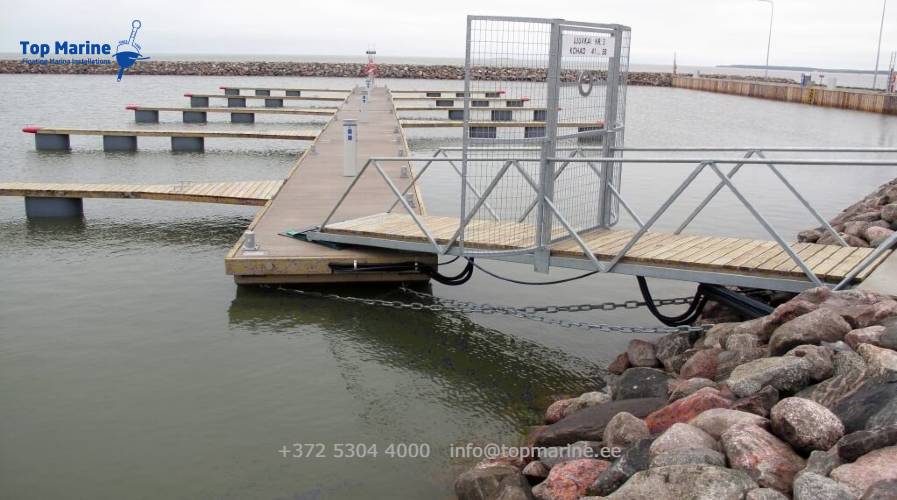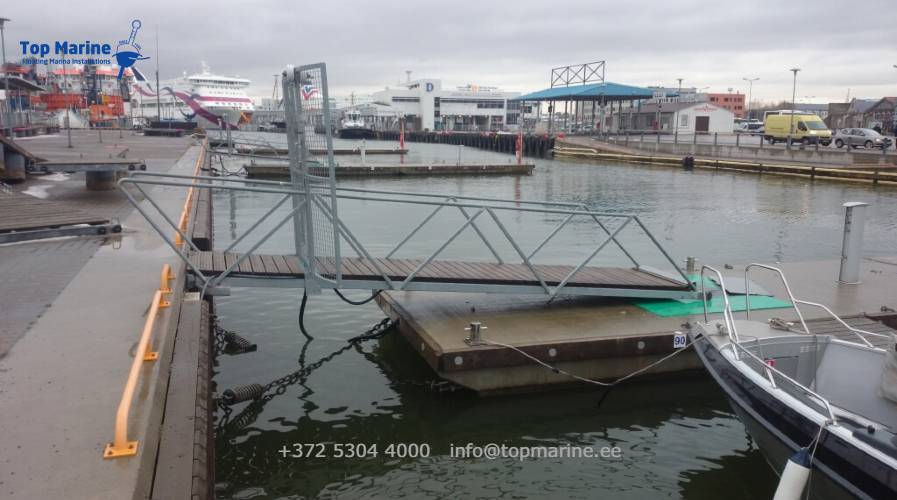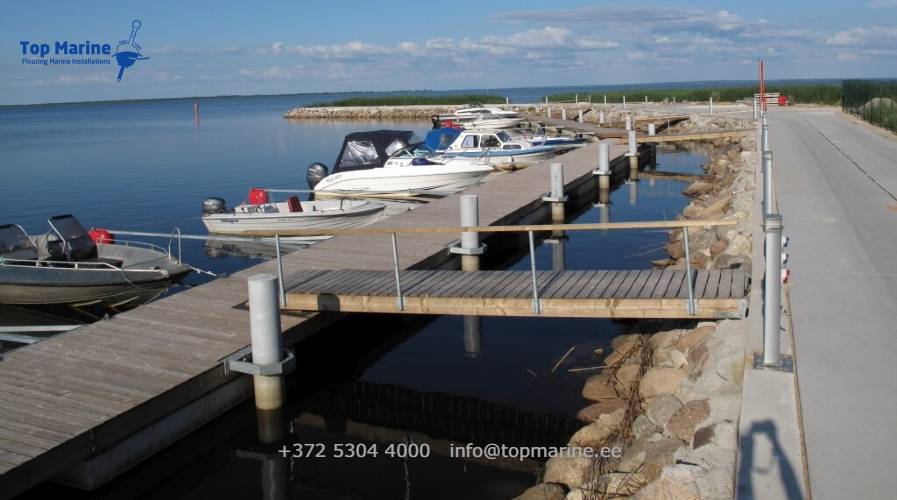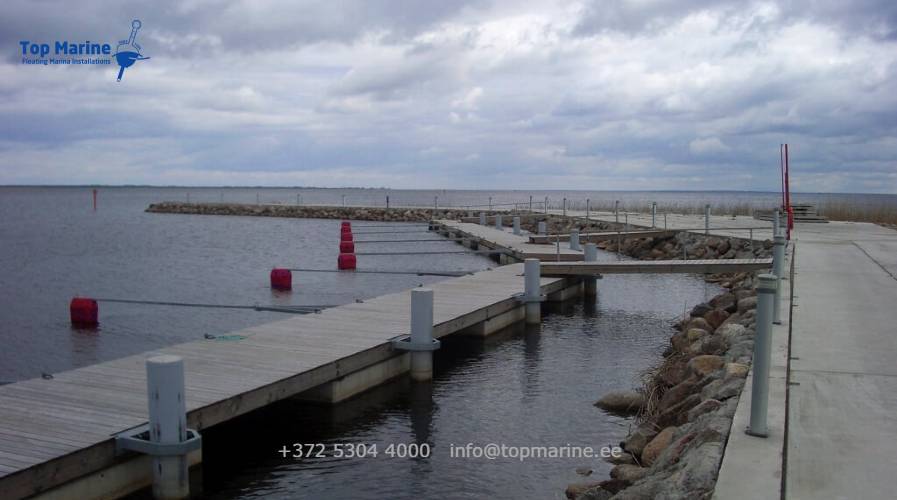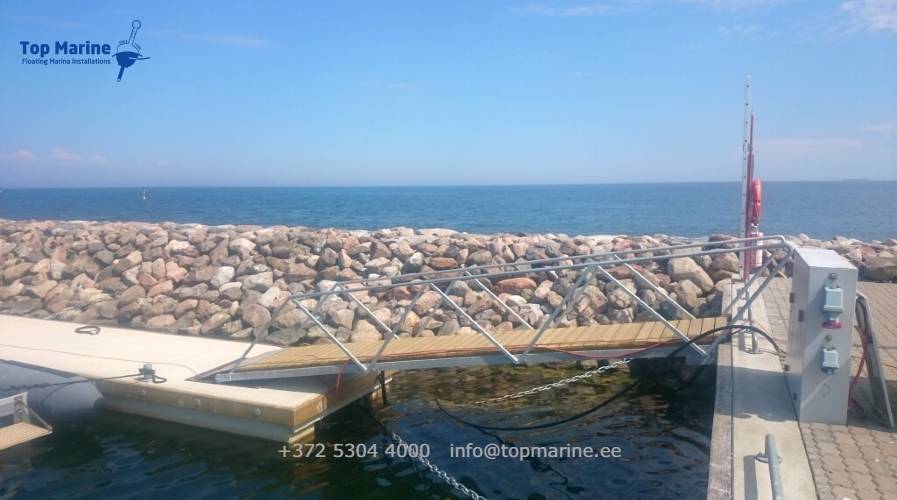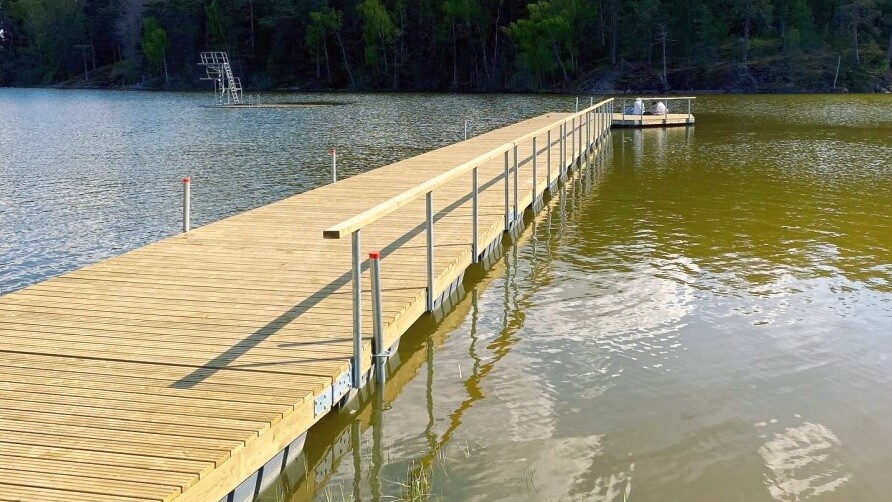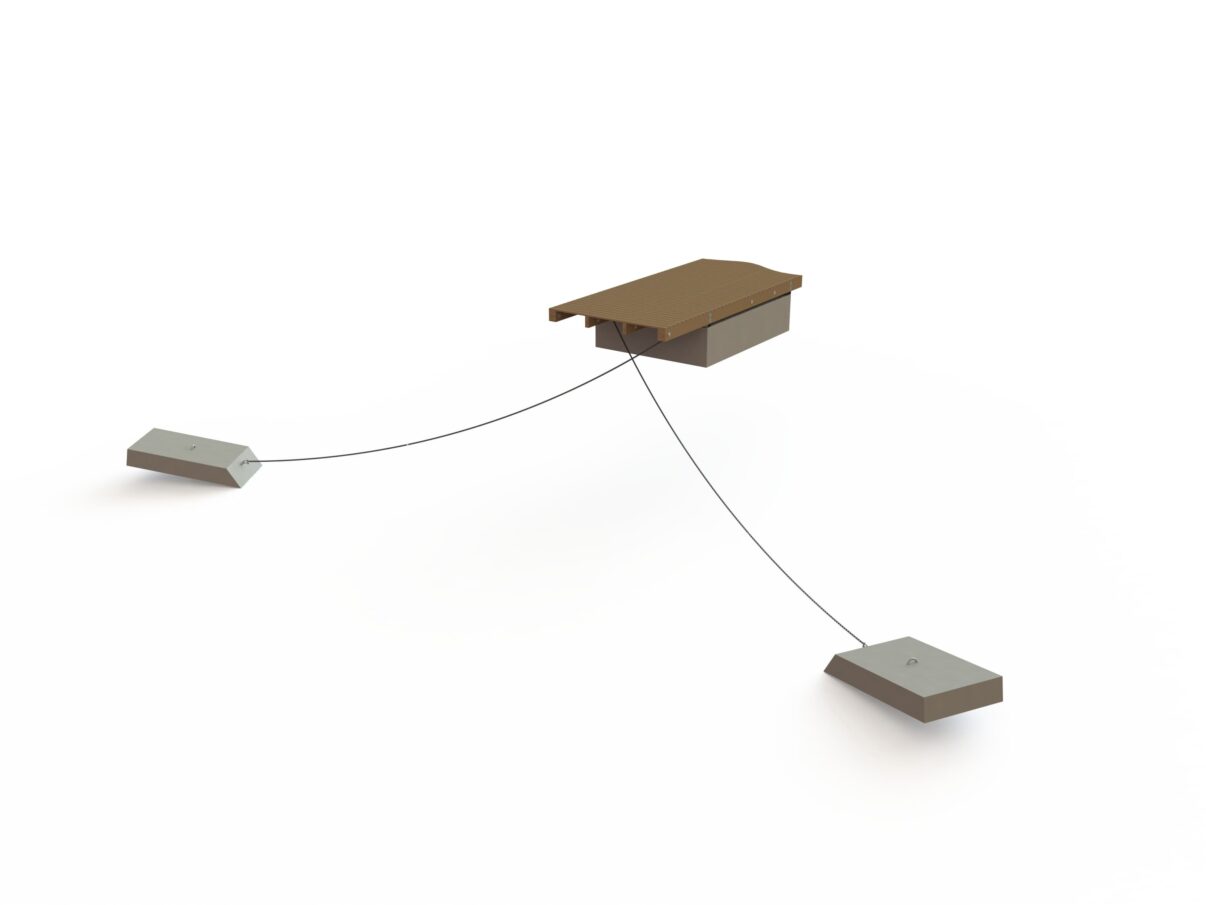
Pontoon anchoring keeps floating structures stable, safe and durable. Top Marine offers pontoon anchoring and pontoon mooring systems for floating pontoons, marinas, bathing areas, floating platforms and mooring buoys.
There are three main ways to anchor pontoons:
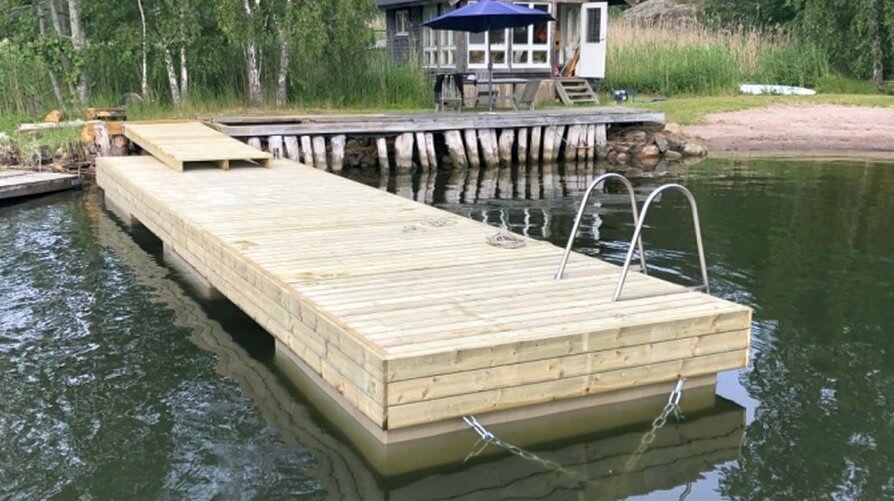
- chain anchoring with concrete anchors;
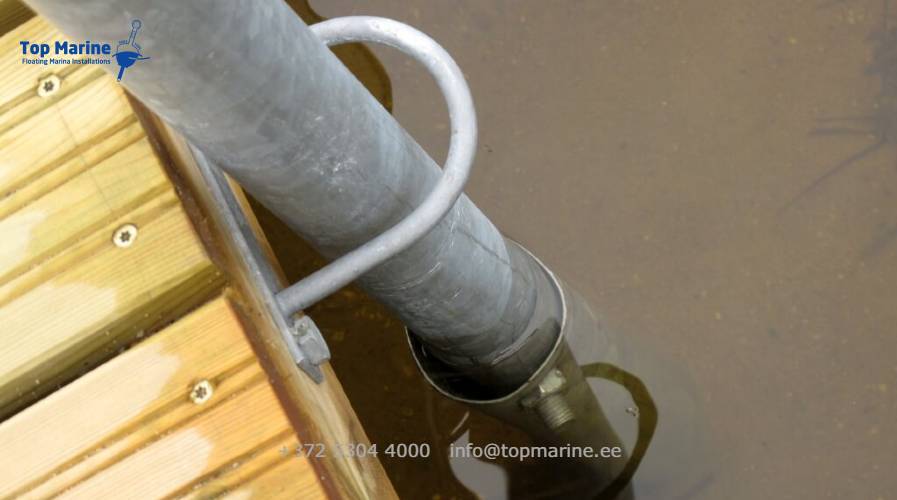
- pile anchoring with mooring piles;
- diagonal mooring.
In some sheltered locations, a single-module pontoon, such as a swimming pontoon or Swimming Pontoon ECO, may only need proper shore-side support. However, pontoons consisting of several modules should always be anchored.
Because concrete anchors are heavy, installation requires special equipment and experience. If you are considering DIY installation, please contact us first so we can advise whether it is possible and how to do it safely.
Pontoon anchoring systems
The right pontoon anchoring system depends on water depth, seabed conditions, wave exposure, ice conditions, pontoon size and intended use.
In Nordic conditions, chain anchoring with concrete anchors is usually the most common solution. However, pile anchoring and diagonal mooring can also work in specific situations.
Chain anchoring with concrete anchors
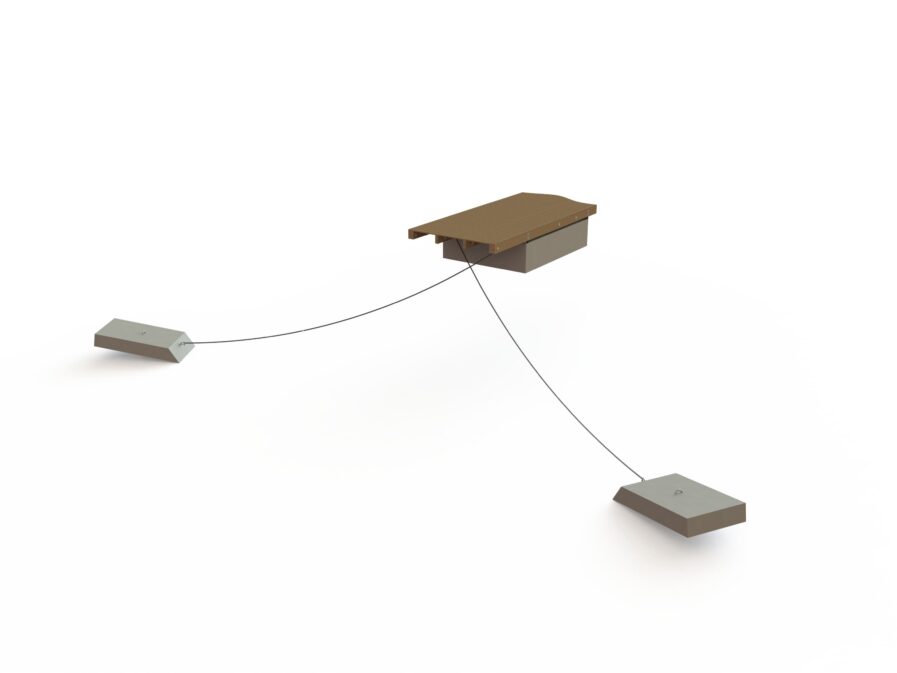
In Nordic conditions with ice and changing water levels, chain anchoring with concrete anchors is usually the most practical and widely used pontoon anchoring method.
This solution requires sufficient water depth and the correct chain length. As a general rule, the water depth should be at least 1 m, and the chain length should be approximately five times the water depth.
Chain anchoring keeps the pontoon in place while allowing it to move up and down with changes in water level. Top Marine concrete anchors use mounting loops and reinforced concrete to withstand seawater and impact from rocks and ice.
We choose the size and number of anchors according to the seabed conditions and the size of the pontoon. If needed, we can add extra weights to the middle of the chain to increase the holding force.
Technical specifications of concrete anchors and extra weights
| Product | Dimensions (mm) | Mounting loops / mooring chain (mm) | Typical use |
|---|---|---|---|
| 50 kg extra weight | 400 × 400 × 175 | 13 | Extra weight for boat pontoons |
| 200 kg extra weight | 600 × 600 × 310 | 13 | Extra weight for timber pontoons with concrete floats |
| 500 kg anchor | 900 × 900 × 270 | 16 / 13–16 | Anchor for swimming pontoons, boat pontoons and 40 L or 60 L mooring buoys |
| 1,000 kg anchor | 1000 × 1200 × 360 | 2 × 18 / 16 | Anchor for boat pontoons, timber pontoons with concrete floats and 60 L or 120 L mooring buoys |
| 2,000 kg anchor | 1200 × 2000 × 360 | 2 × 22 / 16–20 | Anchor for heavy duty pontoons, timber pontoons with concrete floats and 120 L mooring buoys |
Also read: Floating pontoon – DIY or buy a ready-made solution
Pile anchoring
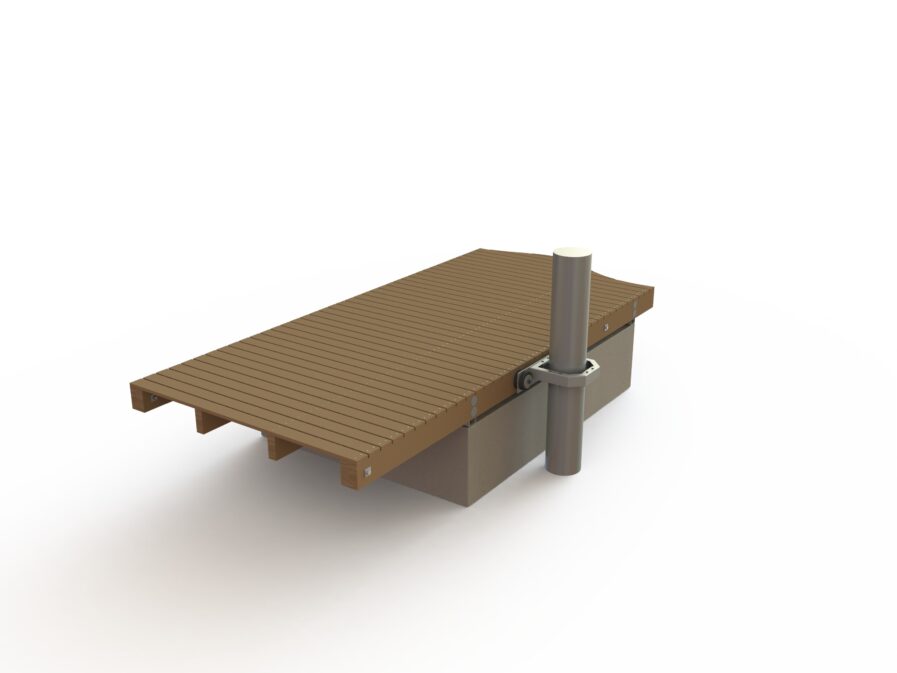
Pile anchoring can work well when the pontoon is installed parallel to the shore, the water is shallow and the seabed is soft. As a general rule, pile anchoring is suitable for water depths of up to approximately 2 m.
Pile mooring creates a very secure connection. However, it is also a rigid fastening method. In icy conditions, moving ice can damage the pontoon and shift the piles out of position.
For this reason, pile anchoring is more common in southern Europe and other areas where the water does not freeze. In Nordic conditions, piles should be removed in autumn and installed again in spring if the pontoon is exposed to ice movement.
Diagonal mooring
Diagonal mooring is used only in special situations. It can be suitable when the pontoon is very close to the shore and there is not enough space for chain anchoring.
This method has a higher risk of ice damage in winter. In addition, the fastening connections may make noise when the pontoon moves in waves. Therefore, we recommend diagonal mooring only when site conditions make other anchoring methods impractical.
Planning a pontoon anchoring project
- You can plan different pontoon layouts in our web application and see the estimated cost of the project. The user manual is available here.
- If you work in marina design, harbour engineering or architecture, you can download mooring anchor models and other Top Marine product models from the ProdLib catalogue. You can also read the ProdLib guide here.
When planning a pontoon anchoring system, we also recommend reading these useful articles: