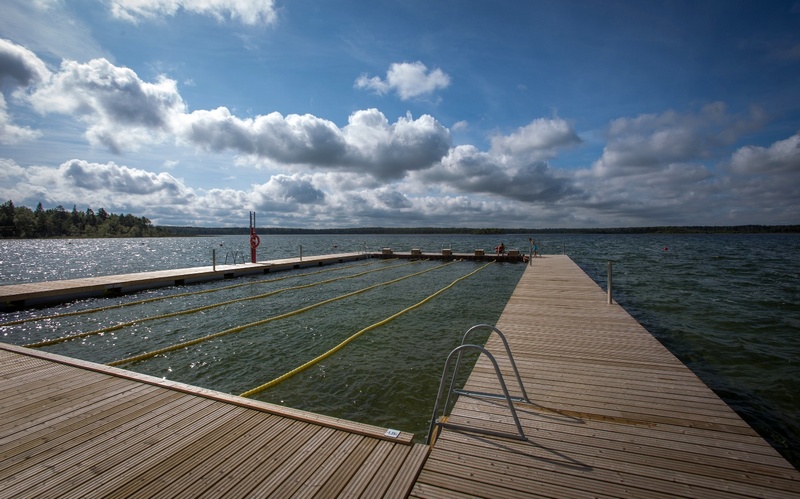
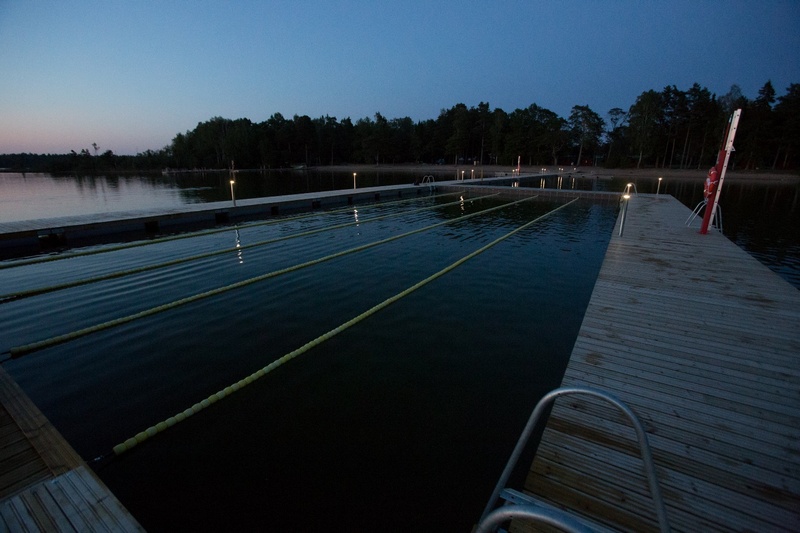
A pontoon pool can make a natural bathing area safer, more comfortable and easier to use. Instead of building a traditional swimming pool, you can create a defined outdoor swimming area with floating pontoons, swimming ladders and other pontoon accessories.
This type of floating pool solution works especially well for public beaches, campsites, holiday resorts, inland lakes and sheltered bathing areas. It helps guide swimmers, creates a clear swimming zone and gives users a stable platform for entering and leaving the water.
For children and less confident swimmers, a pontoon pool also offers something to hold on to. In addition, swimming ladders placed along the pontoons make access to the water safer and more convenient.
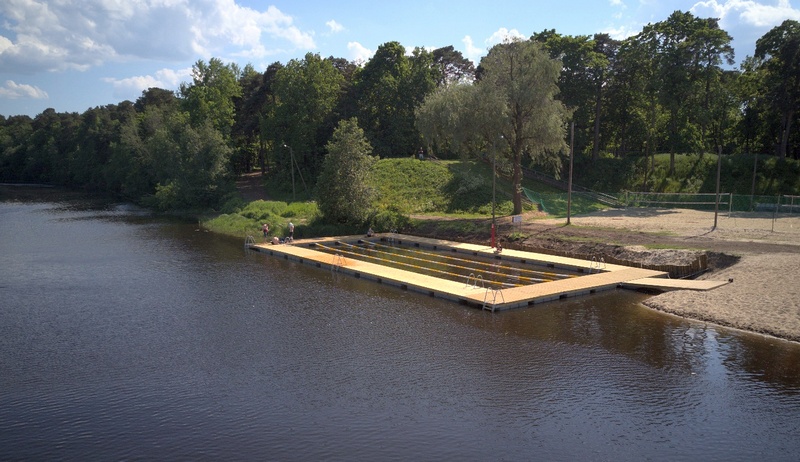
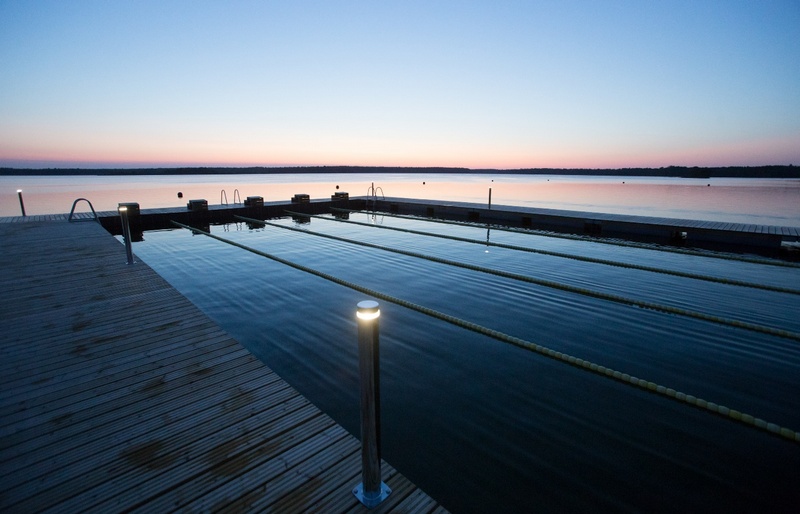
Outdoor swimming pool in Pirita, Estonia
Why build a pontoon pool?
A pontoon pool helps turn a natural shoreline into a more comfortable bathing area. It does not replace supervision or local safety rules, but it improves the structure and usability of the swimming area.
A pontoon pool can help you:
- define the swimming area clearly;
- make access to the water easier;
- create places for swimmers to rest or hold on;
- add swimming ladders in suitable locations;
- provide space for sunbathing and sitting;
- improve access when the shoreline is muddy or shallow;
- make the bathing area more attractive for visitors.
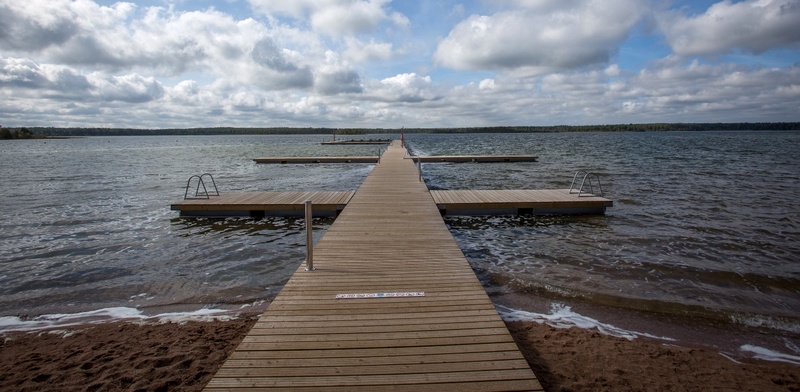
Floating pontoons also work well as walkways. If the water gets deep slowly or the shoreline is muddy, you can use pontoons to create a path to deeper water. As a result, swimmers do not have to walk through mud or shallow water before reaching a comfortable swimming depth.
Where can a pontoon pool be used?
Pontoon pools work best in sheltered locations. Good examples include inland lakes, protected bays, public bathing areas, campsites, holiday resorts and shorelines with low wave exposure.
Before planning the layout, check the site conditions carefully. Important factors include water depth, wave exposure, wind, bottom conditions, ice conditions and access for transport and installation.
For a more detailed overview of site conditions, read our guide: The location of the floating pontoon – 5 factors to consider in nature.
Which pontoons work best for outdoor swimming areas?
The best pontoon type depends on the site, water depth, user profile and project size.
For most outdoor swimming areas, we use swimming pontoons or Swimming Pontoon ECO. These solutions work well for bathing areas, private shores, summer homes and sheltered inland waters.
In some projects, boat pontoons with plastic floats can also work as part of the structure. For larger or heavier sections, we may use timber pontoons with concrete floats, especially when the project needs more stability or higher freeboard.
Higher pontoons can make jumping into the water more attractive. However, users also need to climb higher when they leave the water. Therefore, the final pontoon type should match the bathing area, expected users and safety requirements.
For a wider comparison, read our guide: Which floating pontoon should you choose?.
Planning a safe and comfortable layout
A good pontoon pool layout depends on how people will use the swimming area. Some projects need a simple rectangular swimming zone. Others may need walkways, resting areas, wider platforms, ladders, benches, railings or a separate diving tower.
When planning the layout, consider:
- the size and shape of the swimming area;
- water depth near the shore and inside the swimming zone;
- where swimmers enter and leave the water;
- where swimming ladders should be placed;
- how children, older people and less confident swimmers will use the area;
- whether the site needs benches, railings or safety equipment;
- how you will anchor the pontoon;
- how the structure will handle wind, waves and ice.
You can test different pontoon layouts in the Top Marine web application and get an idea of the project cost. In addition, you can read our guide on how to order a floating pontoon to understand the full process from idea to installation.
Pontoon pool with a diving tower
A diving tower can make an outdoor swimming area more attractive and turn it into a local landmark. However, it also needs careful planning.
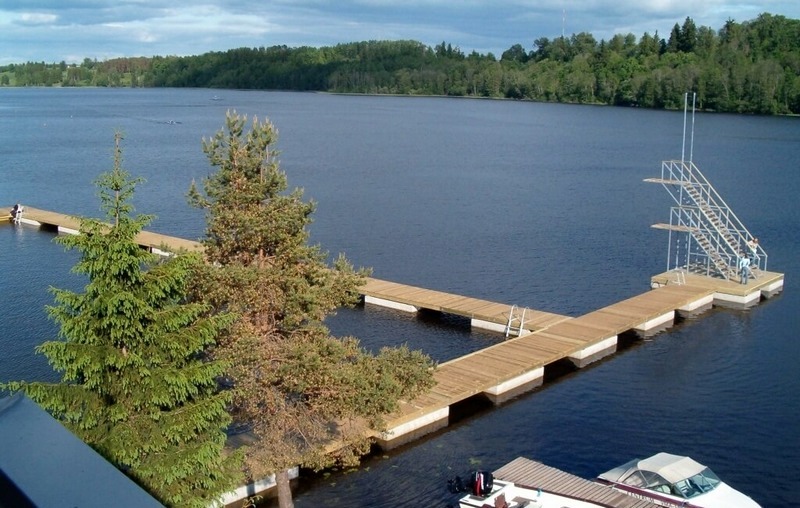
For safety reasons, we usually place the diving tower slightly away from the main swimming area. The structure under the tower must provide enough stability and load capacity for the site and intended use.
In many projects, lighter pontoons work well for the swimming area itself. However, the area under a diving tower may need a stronger platform, such as a section with concrete floats. The final solution depends on the tower, water depth, anchoring and local safety requirements.
Examples of completed pontoon pools
Top Marine has built outdoor swimming areas and pontoon pools in different locations. The examples below show how the right pontoon type depends on the site and intended use.
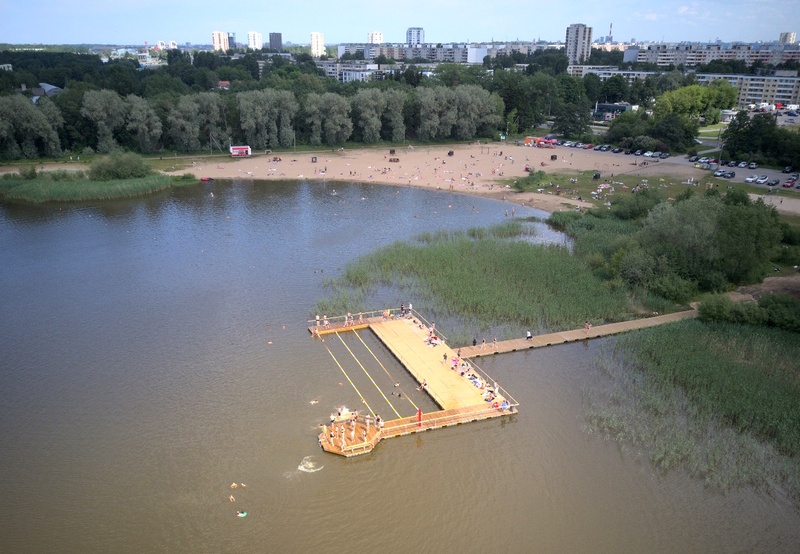
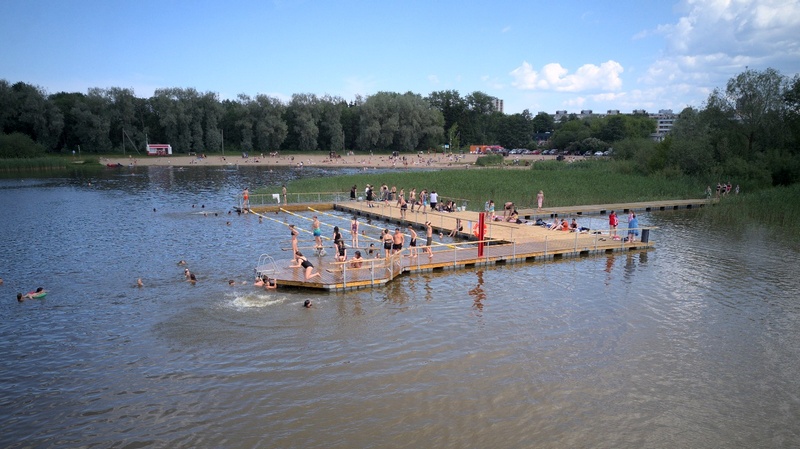
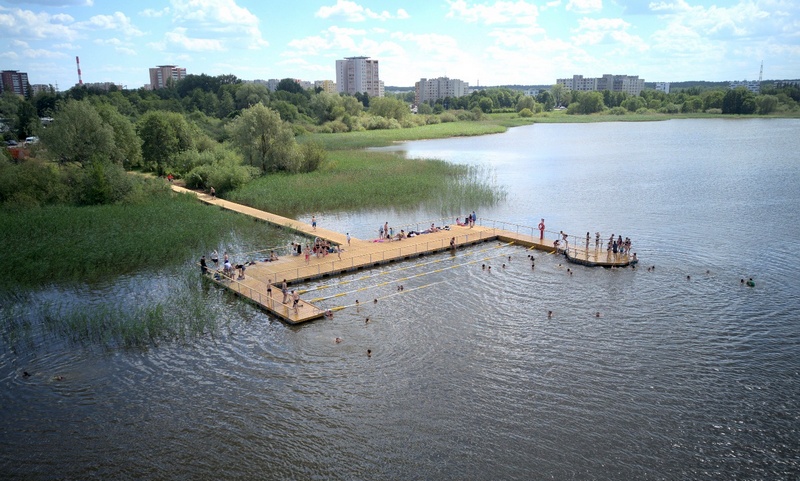
Outdoor swimming pool on Lake Harku, Estonia
For this project, we used swimming pontoons as modules. The pontoons created a clear bathing area and made access to the water easier.
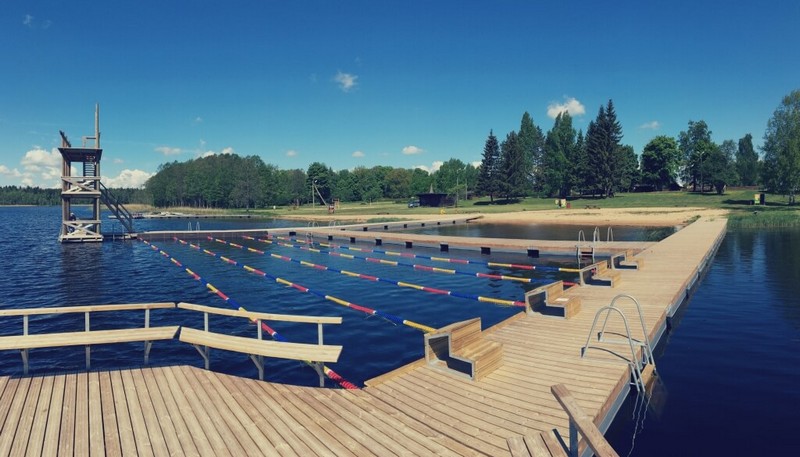
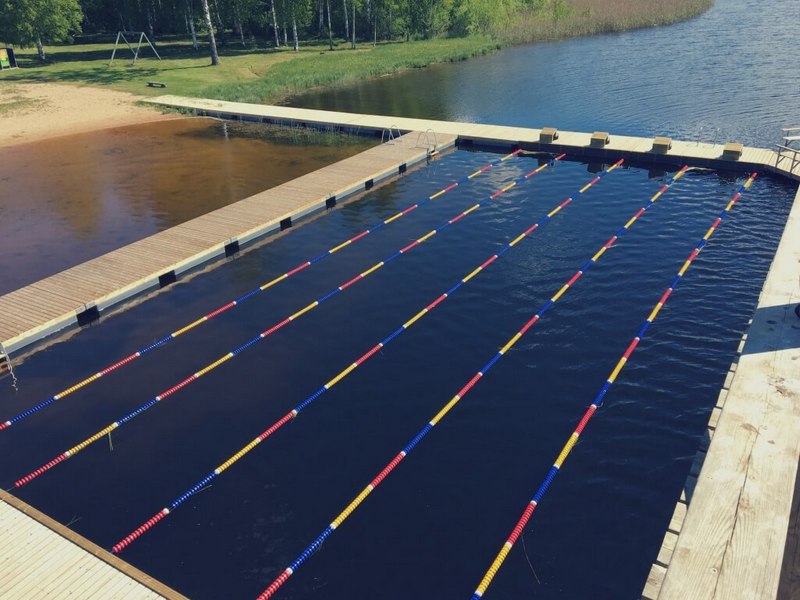
Outdoor swimming pool in Vainjärve, Estonia
For the Vainjärve project, we used Swimming Pontoon ECO modules. This type of solution works well for smaller outdoor swimming areas in sheltered inland waters.
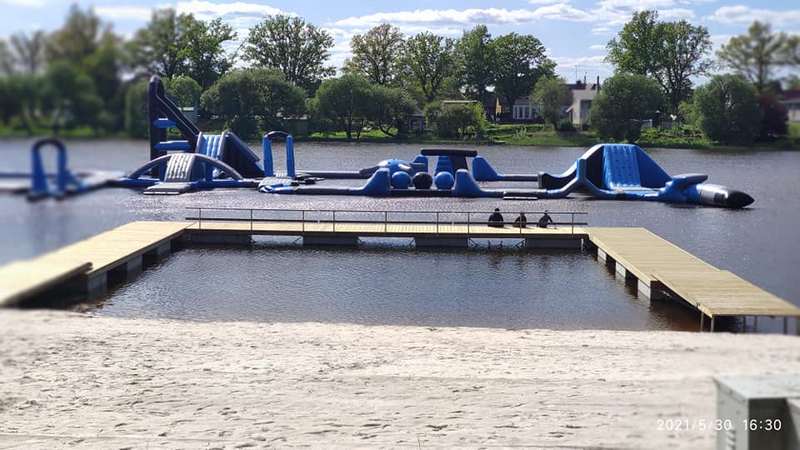
Outdoor swimming pool in Lithuania
For this project, we used platforms on concrete floats. This solution provided more stability for the selected layout and local conditions
Swimming pool in Southern Estonia
For this bathing area, we used swimming pontoons as modules. The solution created a practical floating pool area for swimmers.
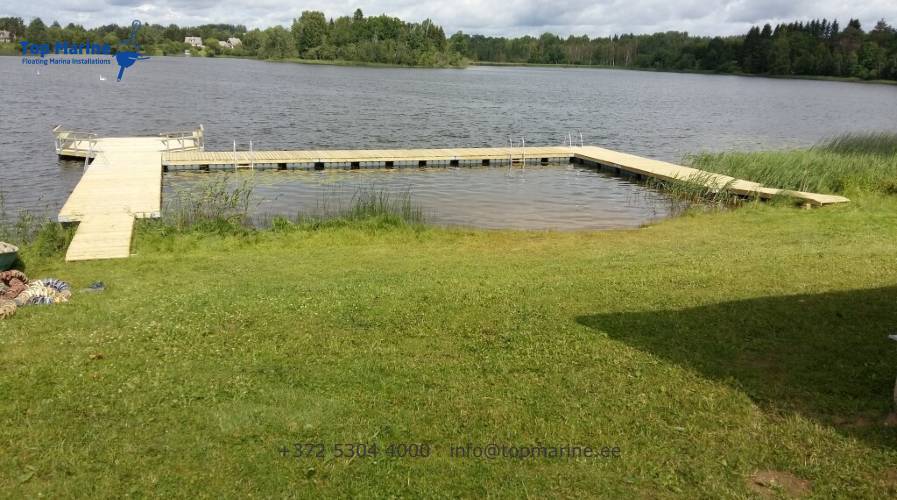
Outdoor swimming pool at Karujärve campsite in Saaremaa, Estonia
For the Karujärve campsite project, we used Swimming Pontoon ECO modules. The result was a simple and comfortable outdoor swimming area for visitors.
Need help planning a pontoon pool?
If you want to build an outdoor swimming area, pontoon pool or floating pool solution, contact Top Marine. We can help choose the right pontoon type, layout, anchoring method, swimming ladders and accessories.
Contact Top Marine and tell us where you want to build the swimming area.