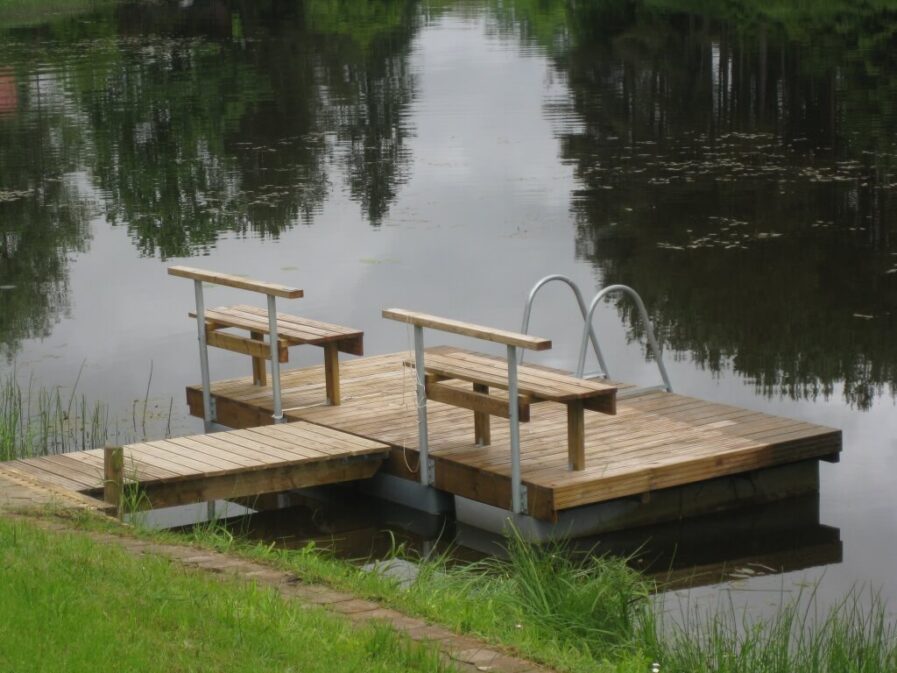
The right pontoon accessories can make your floating pontoon safer, more comfortable and easier to use. Whether you already have a pontoon at your summer cottage, holiday home or private waterfront, or are still planning a new floating pontoon, accessories help you adapt the solution to your everyday needs.
Some accessories improve safety. Others make swimming, boat mooring or evening use more convenient. The best choice depends on how you use the pontoon, where you install it and whether it is mainly for swimming, boating, relaxing or marina use.
Below are six practical accessories to consider for a private swimming pontoon, boat pontoon or small marina.
1. Swimming ladder
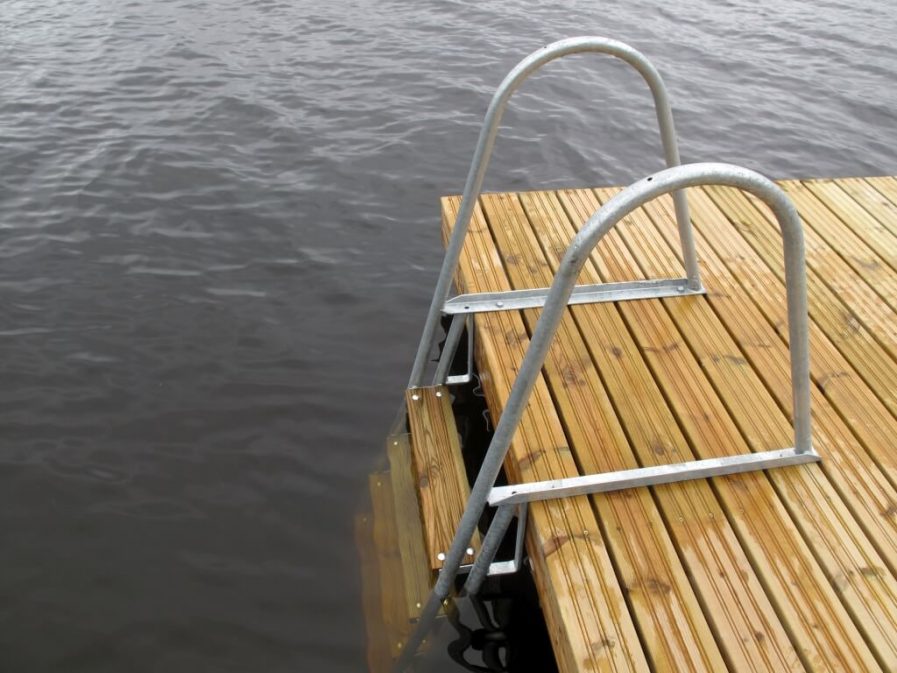
A swimming ladder is one of the most useful accessories for any pontoon used for swimming. It makes getting in and out of the water easier and safer, especially for children, older people and anyone who wants a more comfortable swimming area.
Which type of swimming ladder do I need?
For most floating pontoons, a four-step ladder is usually enough. A floating pontoon moves with the water level, so the ladder normally stays at a practical height even when the water level changes.
A ladder that is too long can cause problems. If it reaches the lakebed or seabed, it may get stuck and damage either the ladder or the pontoon.
Longer seven-step ladders are mainly used on fixed docks, terraces or other stationary structures. In those cases, the structure does not move with the water level, so a shorter ladder may not reach the water when the level drops.
Retractable ladders are also available. They allow you to lift the steps out of the water when the ladder is not in use. This is especially useful in rivers, streams or other places where branches, debris or moving water could damage a fixed ladder.
If swimming is the main purpose of the pontoon, you can also compare swimming pontoons and the Swimming Pontoon ECO.
2. Pontoon railings
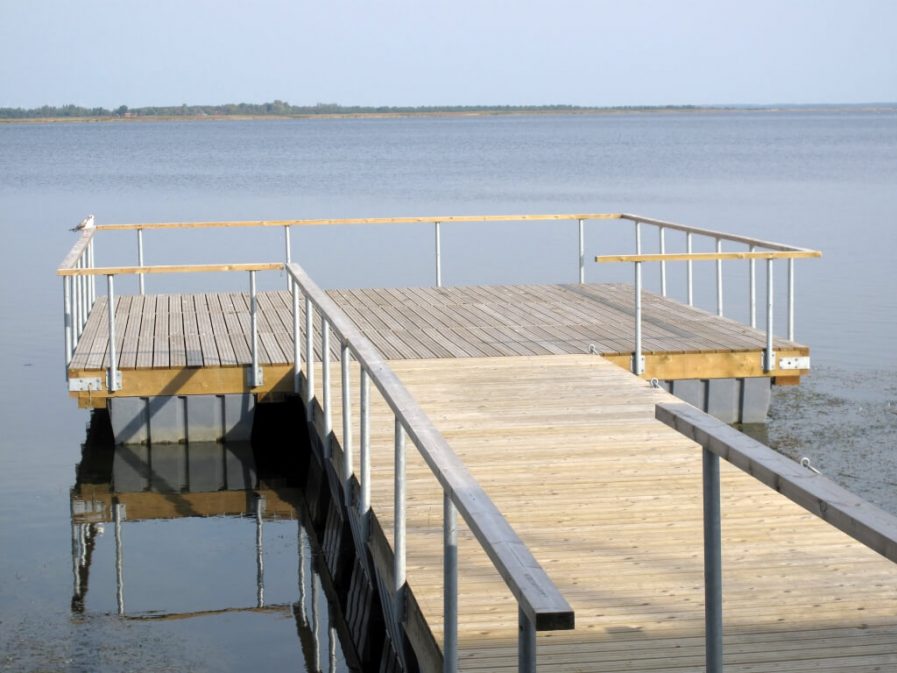
Railings improve safety and comfort on a floating pontoon. They are especially useful when children, guests or many different users spend time near the water.
A railing gives people something to hold on to and reduces the risk of someone stepping too close to the edge. It can also make the pontoon feel more complete and comfortable in everyday use.
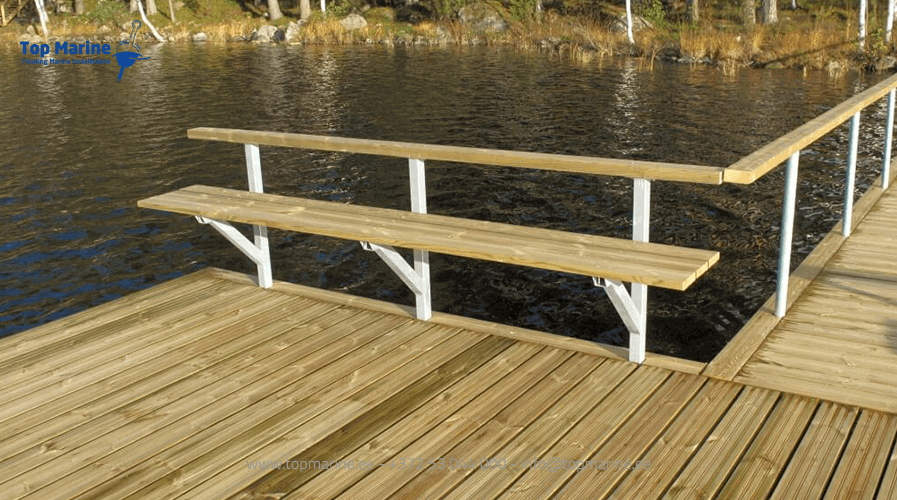
Railings can also be combined with benches. This creates a practical place to sit, enjoy the sun or watch the sunset. Some users also add flowerpots or other small details to make the pontoon feel more personal.
For public areas, marina use or shared waterfronts, railings can also be part of the wider safety equipment plan.
3. Mooring rings and bollards
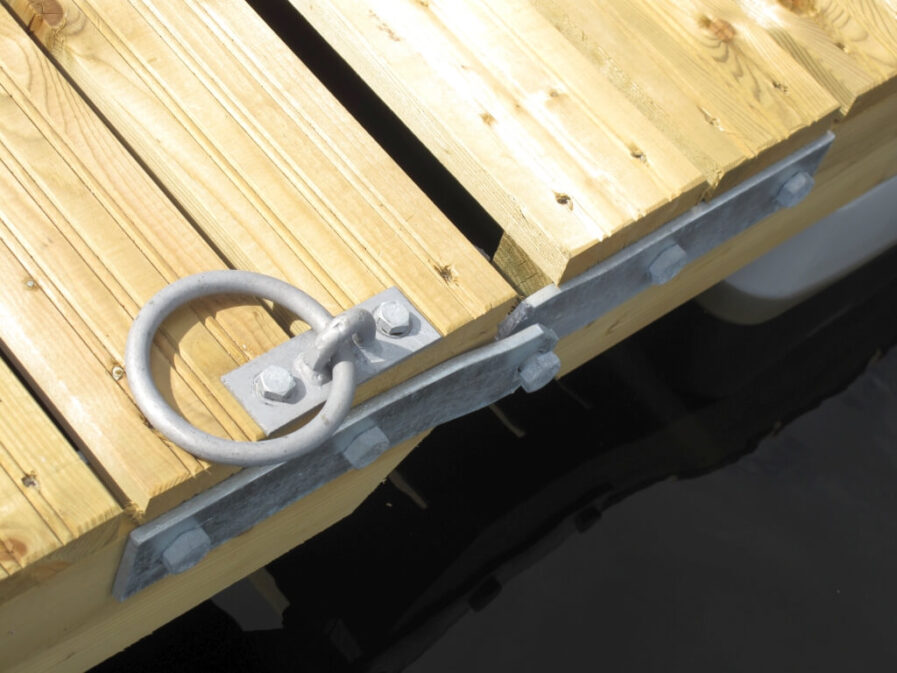
If you want to moor a boat next to your pontoon, you need suitable mooring points. The most common options are mooring rings and bollards.
The right choice depends on the pontoon structure, freeboard height, boat size and how the boat will be used. A small rowing boat and a heavier motorboat do not place the same loads on the pontoon.
Mooring rings and bollards are available in different sizes. They can be hot-dip galvanized or made from stainless steel, depending on the project and environment.
For private boat mooring in sheltered or inland waters, boat pontoons with plastic floats may be a suitable starting point. The final mooring solution should still match the pontoon type, site conditions and anchoring method.
If you are not sure which mooring accessories you need, contact Top Marine for advice.
4. Fenders
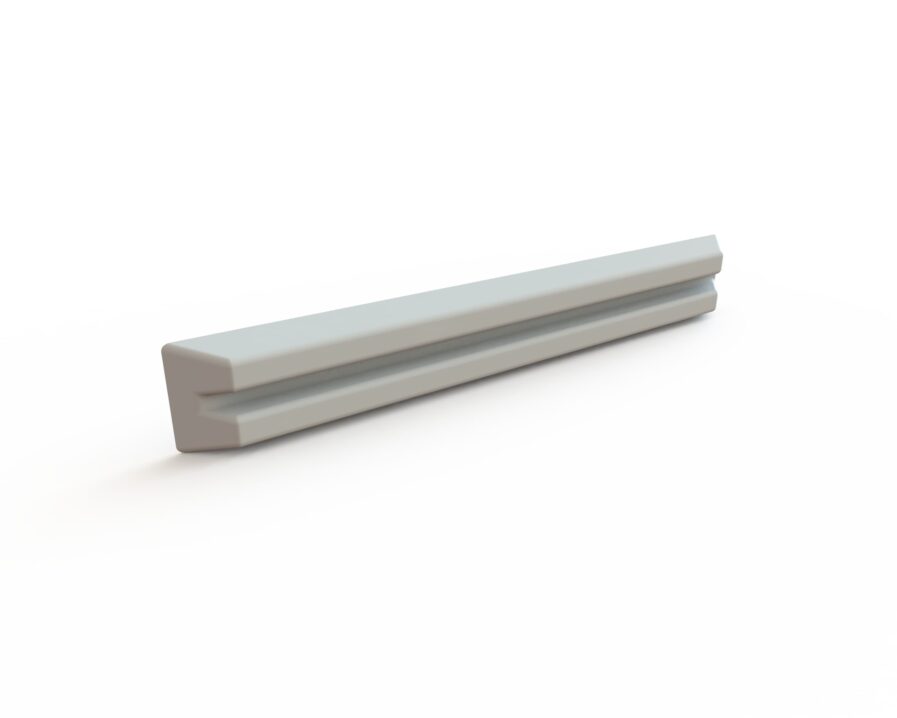
Fenders protect both the boat and the floating pontoon. When a boat moves in wind, waves or passing wake, it can rub against the pontoon and cause scratches or other damage.
Fenders create a protective buffer between the boat and the pontoon. They help reduce direct contact and make mooring safer and more comfortable.
Top Marine supplies durable fenders in different sizes. They come in colours such as white and grey, depending on the product range and project requirements.
Fenders are especially important if the pontoon is used for regular boat mooring, marina berths or shared mooring spaces.
5. Solar-powered lights
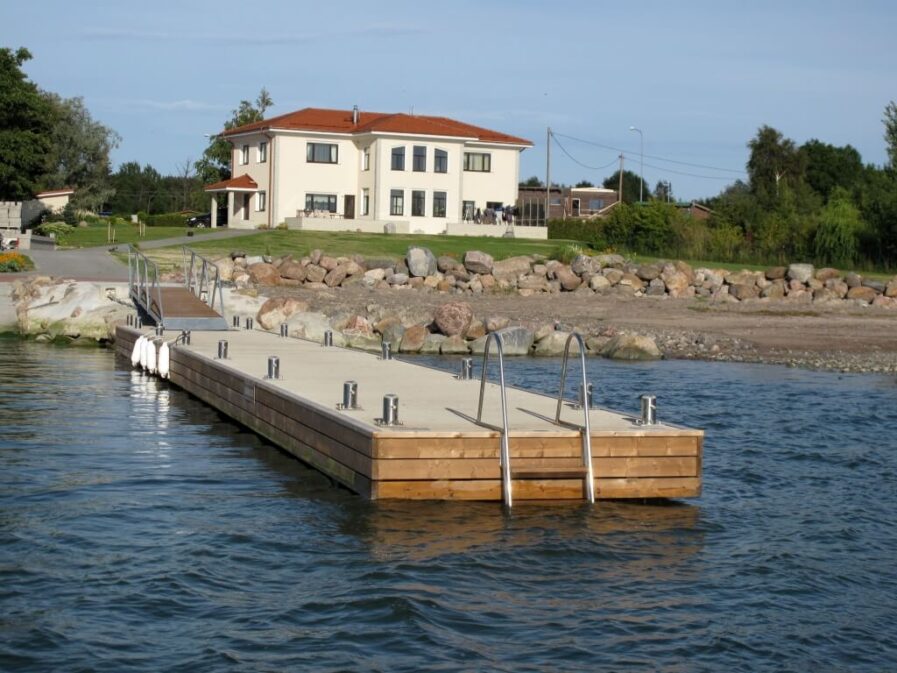
Lighting makes a pontoon easier and safer to use in the evening. It also creates a more pleasant atmosphere around the water.
If you do not want to install cables, solar-powered bollards or LED lights can be a practical option. They are relatively easy to add and can help mark the pontoon edges, access points or seating areas.
Solar lights are especially useful for private waterfronts, bathing areas and summer homes where the pontoon is used mainly in the warmer months.
For larger marina or commercial projects, consider lighting together with the full site plan, access routes and safety requirements.
6. Mooring buoys, boat booms and mooring fingers
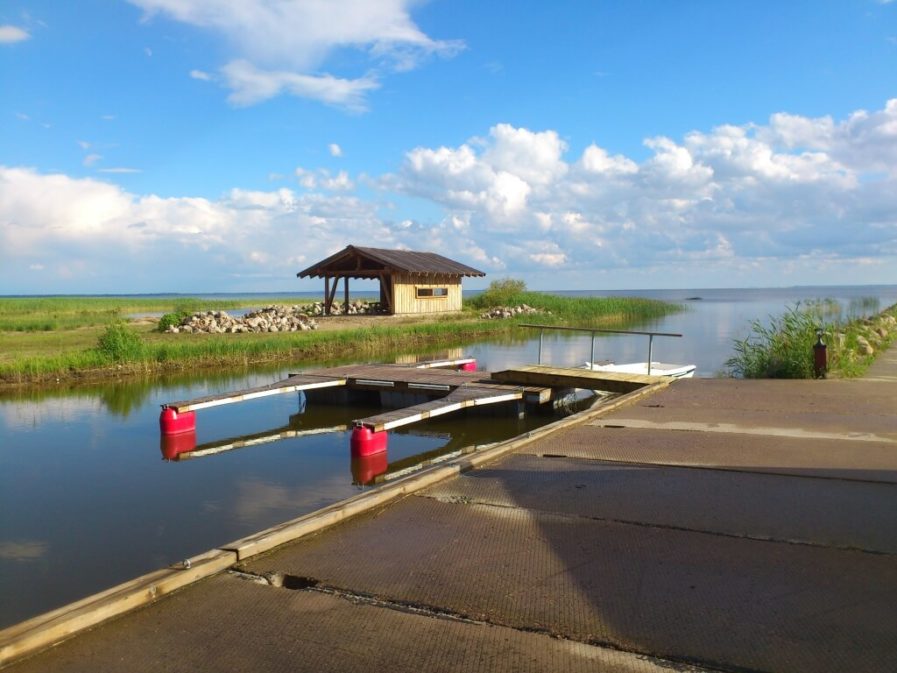
If you want to increase the number of boat spaces, you can use accessories such as mooring buoys, boat booms and mooring fingers.
These accessories help organise mooring and make better use of the available waterfront space. They are useful for private boat pontoons, small harbours and marina projects.
When choosing the right solution, consider:
- pontoon type
- freeboard height
- boat size
- number of boats
- water depth
- wind and wave conditions
- anchoring strength
- how users will access the boats
For more demanding projects, plan the mooring layout together with the pontoon and anchoring system. This helps avoid weak points and makes the whole solution safer in daily use.
How to choose the right pontoon accessories
Start with the way you use the pontoon. A swimming pontoon needs different accessories from a boat pontoon or marina berth.
For swimming and recreation, the most important accessories are usually ladders, railings, seating and safety equipment. For boat mooring, mooring rings, bollards, fenders, buoys, boat booms and anchoring details become more important.
The location also matters. A sheltered summer-home pontoon may need only simple accessories, while a marina or more exposed site may need stronger mooring equipment and a more detailed technical review.
If you are still choosing the pontoon itself, these guides may help:
- Which floating pontoon should you choose?
- How to choose a pontoon – 3 important things to consider
- The location of the floating pontoon – 5 factors to consider in nature
- Water depth measurement
You can also explore the full pontoon accessories range or use the Top Marine web app for early layout planning.
In conclusion
The best pontoon accessories make your pontoon safer, more practical and more enjoyable to use.
For swimming, a suitable ladder and railings can make a big difference. For boat mooring, mooring rings, bollards, fenders, mooring buoys, boat booms and mooring fingers help protect the boat and improve usability. Solar-powered lights can also make the pontoon more comfortable in the evening.
The right combination of accessories depends on the pontoon type, location and intended use. If you are planning a new pontoon or want to upgrade an existing one, contact Top Marine for project-specific advice.